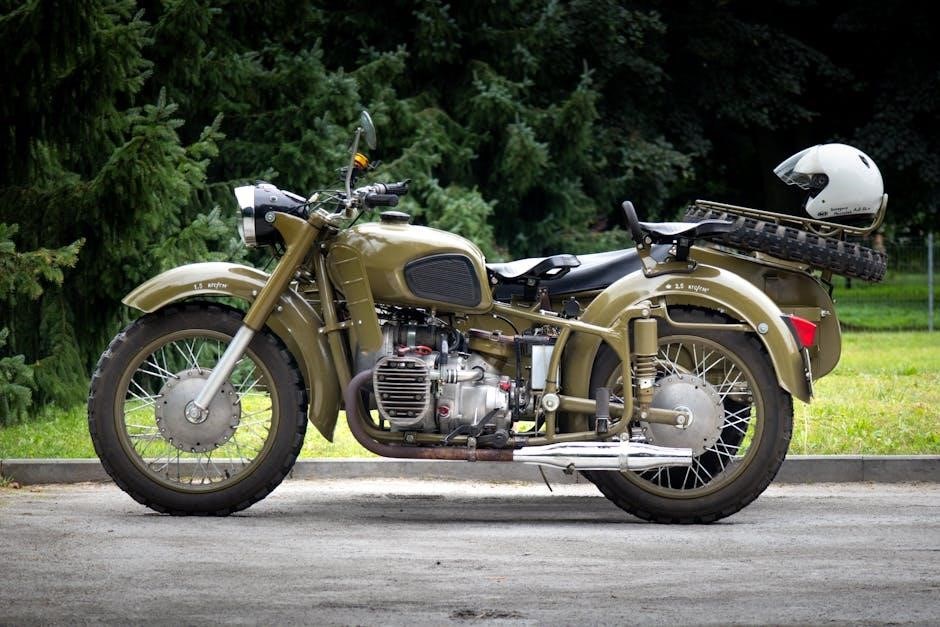
Detailed sidecar plans, often in PDF format, are crucial for a successful build, offering comprehensive instructions, material lists, and geometry guidance.
These plans detail welding, mounting, and suspension, ensuring a safe and functional addition to your motorcycle.
Custom or pre-designed options cater to various skill levels and budget considerations.
What is a Motorcycle Sidecar?
A motorcycle sidecar is essentially a wheel-equipped carriage attached to the side of a motorcycle, creating a three-wheeled vehicle. PDF sidecar plans detail the construction of this addition, transforming a two-wheeled machine into one capable of carrying passengers or cargo.
These plans illustrate how to build a structure that pivots, absorbing bumps and turns, preventing jarring movements to the motorcycle. Historically, sidecars expanded motorcycle utility, and modern plans allow for customization, from vintage aesthetics to advanced features like active suspension and leaning wheels.
Ultimately, a sidecar, guided by detailed plans, enhances stability and offers a unique riding experience.
Why Consider a Sidecar?
Considering a sidecar, guided by comprehensive PDF plans, opens up a world of possibilities. It allows for passenger transport, increased cargo capacity, and a unique, adventurous riding style. For those with mobility challenges, a sidecar offers continued motorcycle enjoyment.
Furthermore, sidecars enhance stability, particularly beneficial for long-distance touring. While converting a motorcycle can be complex, detailed plans simplify the process. Alternatively, exploring options like Ural motorcycles, already equipped with sidecars, provides a readily available solution.
Ultimately, a sidecar expands a motorcycle’s functionality and appeal;
Understanding Sidecar Plans & Design
PDF sidecar plans necessitate understanding geometry, mounting systems, and material selection for a stable build. Detailed plans are vital for safe conversions.
Importance of Detailed Plans
Comprehensive sidecar plans, typically found in PDF format, are absolutely essential for a successful and, most importantly, a safe build. These plans aren’t merely suggestions; they are detailed instructions covering every aspect of the conversion process.
Without precise geometry specifications, accurate mounting guidance (like 4-point systems), and a complete materials list, the project risks instability and potential hazards. Detailed plans minimize guesswork, ensuring correct welding techniques and proper suspension setup.
They also help avoid costly mistakes and ensure the final product meets necessary legal requirements and inspections.
PDF Format Advantages for Sidecar Plans
PDF (Portable Document Format) is the ideal delivery method for intricate sidecar plans due to its universal accessibility and preservation of formatting. Unlike editable formats, PDF ensures the plans appear exactly as intended, regardless of the user’s operating system or software.
This format allows for high-resolution images of detailed drawings, crucial for understanding complex geometry and welding specifications. PDF files are also easily printable, allowing builders to have a physical copy readily available in the workshop.
Furthermore, PDF supports embedded fonts and vector graphics, maintaining clarity and scalability.
Key Elements of a Comprehensive Sidecar Plan
A truly useful sidecar plan, often found as a PDF document, must include detailed geometry diagrams outlining the subframe and mounting points. Precise material lists specifying steel or aluminum frame components are essential, alongside clear welding instructions.
Comprehensive plans also cover wheel selection – considering tapered versus ball bearing types – and suspension system design. Crucially, they address braking systems, including options for independent or linked setups.
Finally, safety guidelines and legal considerations should be included.

Sidecar Construction: Materials & Tools
Steel and aluminum are common frame materials, requiring appropriate welding equipment. Essential tools include cutters, grinders, and measuring devices for precise fabrication.
Frame Materials: Steel vs. Aluminum
Steel is a traditional choice for sidecar frames due to its strength, weldability, and relatively low cost. PDF plans often detail steel construction techniques, emphasizing robust welding for safety. However, steel adds significant weight, impacting motorcycle handling.
Aluminum offers a lighter alternative, improving performance and fuel efficiency. While more challenging to weld, aluminum frames can be exceptionally strong when properly constructed, as some sidecar plans illustrate.
The choice depends on budget, skill level, and desired performance characteristics.
Welding Equipment & Techniques
PDF sidecar plans consistently highlight the critical importance of strong, high-quality welding. MIG and TIG welders are commonly recommended for steel frame construction, requiring practice and proper technique.
Aluminum welding demands specialized TIG equipment and expertise. Plans often detail joint preparation, weld sequencing, and inspection methods to ensure structural integrity.
Prioritizing welding strength is paramount for safety, as a failed weld can have catastrophic consequences.
Essential Tools for Sidecar Building
PDF sidecar plans frequently list a comprehensive toolkit beyond basic hand tools. A robust welder (MIG or TIG), angle grinder, cutting torch, and drill press are fundamental.
Measuring tools like levels, squares, and tape measures are vital for accurate fabrication. Specialized tools, such as a tubing bender, may be needed depending on the plan’s complexity.
Safety gear – welding helmet, gloves, and eye protection – is non-negotiable for a safe build.

Sidecar Geometry & Mounting
PDF plans emphasize precise geometry and 4-point mounting for stability. Subframe design is critical, ensuring proper load distribution and safe motorcycle handling.
4-Point Mounting Systems Explained
PDF sidecar plans consistently recommend 4-point mounting systems for their superior stability and stress distribution compared to simpler methods. These systems utilize four connection points – typically two on the motorcycle’s frame and two on a reinforced subframe – to securely attach the sidecar.
Detailed plans illustrate the precise placement and reinforcement needed at each mounting point, often specifying welding techniques and material thicknesses. This approach minimizes flex and torsional stress on the motorcycle’s chassis, crucial for predictable handling. The plans also cover necessary geometry considerations to ensure proper alignment and prevent unwanted steering effects.
Understanding these mounting principles, as detailed in the PDF, is paramount for a safe and enjoyable sidecar experience.
Subframe Requirements & Design
PDF sidecar plans emphasize a robust subframe as essential for safely transferring the sidecar’s weight and stresses to the motorcycle’s chassis. Plans detail the necessary steel tubing specifications – diameter, wall thickness – and welding procedures for constructing a structurally sound subframe.
Designs often incorporate triangulation for increased rigidity and clearly illustrate attachment points to the motorcycle’s frame; The geometry of the subframe is critical; plans provide dimensions and angles to maintain proper alignment and handling.
Careful adherence to these PDF plan specifications is vital for a durable and safe sidecar installation.
Optimizing Geometry for Stability
PDF sidecar plans prioritize geometry to counteract the inherent instability introduced by adding a sidecar. Key considerations detailed within these plans include wheel track width, lean-out angle, and the sidecar’s overall center of gravity.
Plans illustrate how these factors influence handling, particularly during cornering and braking. Achieving optimal geometry minimizes steering effort and reduces the tendency for the motorcycle-sidecar combination to lift or sway.
Precise measurements and adjustments, as outlined in the PDF, are crucial for a stable and predictable ride;
Wheel & Suspension Considerations
PDF sidecar plans detail wheel bearing types – tapered are preferred for sidecar applications – and suspension systems to absorb side loads and bumps.
Selection impacts handling.
Wheel Bearing Types: Tapered vs. Ball Bearing
PDF sidecar plans emphasize the critical difference between tapered and ball bearing wheel bearings. Harley-Davidson transitioned away from tapered bearings around 2000, but these remain superior for sidecar use.
Tapered bearings are designed to handle the significant radial and thrust loads imposed by a sidecar, preventing premature failure.
Ball bearings, commonly found in modern motorcycles, aren’t engineered for these side loads and experience drastically reduced lifespan when used in a sidecar application, leading to safety concerns.
Plans will often specify the correct bearing type for optimal durability and performance.
Sidecar Wheel Selection
PDF sidecar plans dedicate sections to proper wheel selection, a vital aspect of build safety and handling. Considerations include wheel diameter, width, and load capacity, matching these to the motorcycle and intended use.
Plans often recommend sourcing wheels designed for sidecar applications or adapting motorcycle wheels with appropriate tapered bearings.
Vintage Harley sidecars utilized specific wheel designs; modern plans detail compatible alternatives. Correct wheel choice minimizes stress and ensures a stable, predictable ride.
Detailed plans will specify appropriate tire sizes too.
Suspension Systems for Sidecars
PDF sidecar plans thoroughly cover suspension, crucial for rider comfort and handling. Options range from basic leaf spring setups to more sophisticated independent suspension systems, detailed with schematics and material lists.
Active suspension, seen in some vintage Harley sidecars, is a complex system often requiring custom fabrication, as detailed in advanced plans.
Plans emphasize the importance of matching suspension travel and spring rates to the motorcycle and sidecar weight, ensuring balanced performance and stability on varied terrain.

Braking Systems for Sidecars
PDF plans detail independent sidecar braking or linking it to the motorcycle’s system, emphasizing safety. Proper brake balance is vital for controlled stopping.
Independent Braking Systems
Detailed sidecar plans, often available in PDF format, frequently showcase independent braking systems for the sidecar wheel. This setup allows the rider to control the sidecar’s braking force separately from the motorcycle, enhancing stability and control, particularly during cornering or uneven terrain.
PDF guides will illustrate the necessary components – including a dedicated master cylinder, brake line routing, and caliper mounting – for a reliable independent system.
These plans emphasize the importance of proper adjustment and bleeding to ensure optimal performance and prevent dragging or uneven braking.
Linking Sidecar Brakes to Motorcycle
PDF sidecar plans often detail methods for linking the sidecar’s braking system to the motorcycle’s, creating a synchronized braking experience. This approach, while simpler than independent systems, requires careful calibration to avoid imbalances and maintain control.
Detailed diagrams within the PDF will illustrate various linkage mechanisms, from cable-operated setups to hydraulic connections.
Plans emphasize the need for precise adjustment to ensure the sidecar brake engages proportionally with the motorcycle’s, preventing pulling or instability during braking maneuvers.
Safety Considerations in Sidecar Building
PDF plans prioritize strong welding and proper weight distribution for stability. Legal compliance and thorough inspections are vital for a safe, functional sidecar.
Importance of Strong Welding
PDF sidecar plans heavily emphasize the critical role of robust welding throughout the entire construction process. Structural integrity relies on high-quality welds, particularly within the frame and mounting points.
Poor welding can lead to catastrophic failure, compromising rider safety.
Detailed plans often specify weld types and techniques, ensuring a secure connection between components.
Proper preparation of materials and adherence to welding best practices, as outlined in the PDF, are non-negotiable for a safe and durable sidecar build.
Weight Distribution & Handling
PDF sidecar plans dedicate significant attention to weight distribution, a key factor influencing handling and stability. Improper distribution can create dangerous imbalances, affecting steering and braking.
Plans detail optimal placement of the sidecar relative to the motorcycle’s center of gravity.
Careful consideration must be given to passenger and cargo weight, as outlined in the PDF.
Achieving balanced weight distribution is crucial for a predictable and enjoyable riding experience, minimizing the risk of instability.
Legal Requirements & Inspections
PDF sidecar plans often briefly mention the importance of adhering to local legal requirements, but detailed research is essential. Regulations regarding sidecar builds vary significantly by region.
Inspections are frequently required post-construction to ensure safety and compliance.
Plans may not cover specific legalities; therefore, consulting local DMV or transport authorities is crucial.
Documentation of the build process, materials used, and adherence to safety standards can streamline the inspection process.
Finding & Evaluating Sidecar Plans
Online resources offer numerous PDF sidecar plans, but quality varies. Evaluate completeness, detail, and clarity before committing to a build based on a plan.
Online Resources for Sidecar Plans
Pinterest serves as a valuable starting point, showcasing diverse motorcycle sidecar plans and inspiring custom builds. Numerous online forums and communities dedicated to sidecar enthusiasts frequently share plans, offer advice, and facilitate discussions about various designs.
Dedicated websites and marketplaces often host downloadable PDF plans, ranging from simple to complex designs. Careful vetting is essential; assess user reviews and plan previews before purchasing.
Remember to search for plans specifically tailored to your motorcycle model for optimal compatibility and a smoother build process.
Evaluating Plan Quality & Completeness
Comprehensive sidecar plans in PDF format should include detailed drawings, precise measurements, and a complete bill of materials. Look for plans that clearly illustrate the mounting system, geometry, and welding requirements.
Assess whether the plans address crucial aspects like suspension, braking, and weight distribution.
Prioritize plans with clear instructions and diagrams, minimizing ambiguity during the construction process. User reviews can offer valuable insights into plan accuracy and ease of use.
Custom vs. Pre-Designed Plans
Pre-designed sidecar plans in PDF format offer convenience and a structured approach, ideal for builders with less experience. However, they may require modifications to fit specific motorcycles.
Custom plans, though demanding more skill, allow for tailored designs perfectly matching your bike and preferences.
Consider your fabrication abilities and desired aesthetic when choosing. Custom plans often involve more welding and geometry adjustments, demanding greater expertise.

Ural Motorcycles as a Sidecar Solution
Ural motorcycles are frequently offered with sidecars, presenting a viable alternative to PDF-guided custom builds, simplifying the process significantly.
Advantages of Ural Sidecar Models
Ural motorcycles, uniquely, often come factory-equipped with sidecars, bypassing the need for complex PDF-based construction plans and the associated fabrication challenges. This offers a readily available, integrated solution, eliminating the intensive labor of a custom build.
These models are designed for sidecar use, ensuring proper geometry and suspension balance from the outset. Furthermore, Urals often feature robust construction suited for varied terrains, reducing the reliance on meticulously following detailed PDF instructions for structural integrity.
This pre-built approach can be significantly more cost-effective and time-saving compared to sourcing materials and interpreting intricate sidecar plans.
Ural vs. Building a Custom Sidecar
Choosing between a Ural and a custom build, guided by PDF sidecar plans, hinges on skill and resources. A custom build demands significant fabrication expertise, welding proficiency, and diligent adherence to detailed plans.
PDF plans offer personalization, but require time, tools, and a deep understanding of motorcycle geometry and suspension. Conversely, a Ural provides an immediate, factory-integrated solution, sidestepping these complexities.
While Urals may lack the bespoke aesthetic of a custom build, they represent a practical, often more affordable, alternative to navigating the intricacies of sidecar construction from plans.
Harley-Davidson Sidecars: Historical Context
Vintage Harley sidecars, detailed in some PDF plans, featured unique designs; later models explored active suspension and even leaning wheel technology for improved handling.
Vintage Harley Sidecars & Features
Historical Harley-Davidson sidecars, often documented in older PDF plans, represent a fascinating era of motorcycle customization. These early sidecars frequently showcased robust construction, prioritizing durability over complex features.
Features included streamlined bodywork, often crafted from steel or fiberglass, and basic suspension systems designed to mitigate some road imperfections.
PDF plans from this period may lack the detailed engineering found in modern designs, but they offer valuable insight into the aesthetic and functional priorities of the time, showcasing a simpler approach to sidecar integration.
Active Suspension & Leaning Wheel Technology
Advanced sidecar designs, detailed in some PDF plans, incorporate active suspension systems to enhance ride quality and handling. These systems dynamically adjust to road conditions, minimizing body roll and improving stability.
Leaning wheel technology, a more recent innovation, allows the sidecar wheel to independently tilt into turns, further reducing lean angles and improving cornering performance.
PDF documentation for these complex systems often requires a strong engineering background for successful implementation, detailing intricate mechanical linkages and control systems.

Challenges in Sidecar Conversion
PDF plans highlight difficulties converting bikes lacking lower frames; a safe, functional build demands significant modifications and careful geometry adjustments for stability.
Converting Motorcycles Without Lower Frames
PDF sidecar plans frequently emphasize the substantial challenges encountered when adapting motorcycles without pre-existing lower frames for sidecar integration. These plans detail the necessity of fabricating a robust subframe, meticulously designed to distribute the added weight and stresses effectively.
Successfully addressing this requires advanced welding skills and a thorough understanding of motorcycle geometry.
Plans often illustrate reinforcement techniques and material selection to ensure structural integrity, as simply bolting a sidecar onto an unprepared frame is inherently unsafe and compromises handling.
Ensuring a Safe & Functional Build
PDF sidecar plans prioritize safety, stressing the importance of strong welding throughout the construction process. Detailed diagrams illustrate proper joint preparation and execution to withstand significant stresses.
Plans emphasize meticulous weight distribution calculations to maintain stable handling characteristics.
Furthermore, they often include sections on legal compliance, outlining required inspections and modifications to ensure the completed sidecar meets safety standards, resulting in a reliably functional addition to your motorcycle.
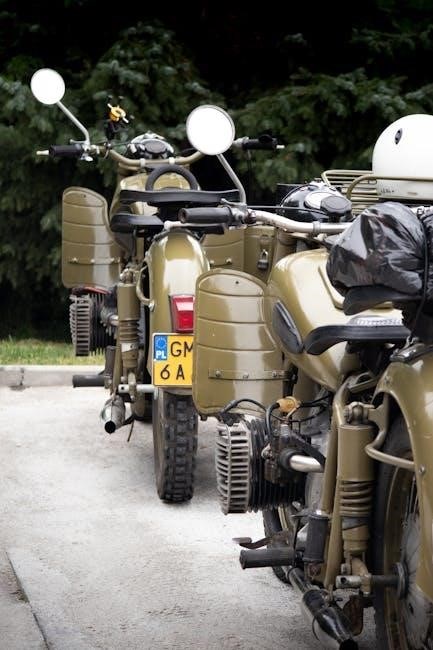
Cost Analysis: Building vs. Buying
PDF plans help estimate material and tool costs for a custom build, allowing comparison with pre-built sidecar prices, aiding informed budget decisions.
Estimated Costs of Materials & Tools
Detailed sidecar plans, often available as PDF downloads, are instrumental in accurately forecasting expenses. Steel framing materials typically range from $300 to $800, while aluminum can exceed $1000. Welding equipment, if not already owned, represents a significant investment – between $500 and $2000 depending on quality.
Essential tools like angle grinders, drills, and measuring instruments add another $200-$500. Wheel and suspension components can cost $400-$1200, depending on specifications. Utilizing a PDF plan’s material list streamlines purchasing and minimizes waste, ultimately controlling overall project costs;
Comparing Costs of Custom Builds & Pre-Built Sidecars
PDF sidecar plans empower builders to assess the economic viability of a custom project. A complete custom build, utilizing detailed PDF instructions, generally ranges from $2,000 to $6,000, factoring in materials and tools. Pre-built sidecars, however, can easily exceed $5,000, reaching upwards of $15,000 for models with advanced features like active suspension.
While a PDF plan requires significant labor, it offers cost savings and customization. Considering the expense of vintage Harley sidecars, a well-executed custom build often proves more economical.
Customization Options for Sidecars
PDF plans facilitate personalized sidecar builds, allowing for unique bodywork, integrated storage solutions, and aesthetic modifications to match your motorcycle’s style.
Bodywork & Aesthetics
PDF sidecar plans often provide a foundational structure, but the bodywork and aesthetics are where true customization begins. Builders can utilize plans as a guide while incorporating materials like fiberglass, aluminum, or even repurposed vintage panels.
The aesthetic choices are limitless, ranging from streamlined, modern designs to classic, retro styles.
Detailed plans can assist in shaping the body to complement the motorcycle, ensuring a cohesive and visually appealing final product. Consider paint schemes and finishes to further personalize the sidecar’s appearance.
Adding Storage & Features
PDF sidecar plans frequently focus on the structural aspects, but integrating storage and additional features enhances practicality. Plans can be adapted to include integrated luggage compartments, tool storage, or even passenger seating within the sidecar body.
Consider adding features like weatherproof seals, interior lighting, or USB charging ports for increased convenience.
Careful planning ensures these additions don’t compromise the sidecar’s geometry or weight distribution, maintaining stability and handling.
Resources for Sidecar Builders
Online forums and communities offer invaluable support, while manufacturers and suppliers provide PDF plans and essential sidecar building materials and expertise.
Online Forums & Communities
Engaging with online forums dedicated to sidecar enthusiasts is incredibly beneficial. These platforms serve as repositories of knowledge, offering access to shared PDF sidecar plans, build logs, and troubleshooting advice.
Builders readily exchange experiences, providing insights into geometry, welding techniques, and material selection.
Active communities foster collaboration, helping newcomers navigate the complexities of sidecar construction and locate reliable suppliers for PDF plans and components.
They are a great place to ask questions!
Manufacturers & Suppliers
Several manufacturers and suppliers specialize in sidecar components and PDF plans. These resources offer both complete sidecar kits and individual parts for custom builds, catering to diverse project scopes.
Finding a reputable supplier is crucial for sourcing quality materials and detailed PDF plans, ensuring structural integrity and safety.
Some companies provide pre-designed plans alongside fabrication services, while others focus solely on supplying the necessary components for a DIY approach.
Research is key!
Be First to Comment